
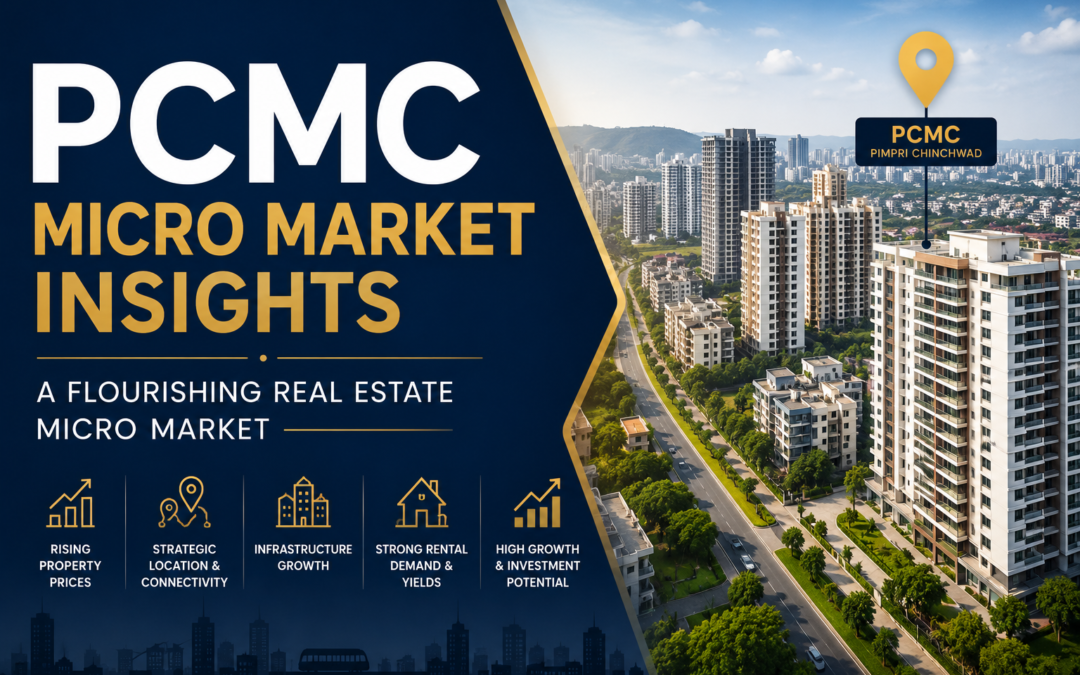
PCMC Micro Markets Insights: A Flourishing Real Estate Micro Market
The Pimpri Chinchwad Municipal Corporation (PCMC) region has become one of the most dynamic real estate micro markets within the larger Pune metropolitan area. The region has traditionally been known for its industrial heritage, infrastructure development, and relatively more affordable housing options.
Market Overview and Price Trends
The PCMC real estate market has shown resilience in recent years, despite periodic corrections. As of early 2026, the average property prices, with some premium locations commanding property rates up to INR 15,000 to INR 18,000 per sq. ft., The property prices in PCMC have shown an upward trend over the last few years. The PCMC real estate market has shown periodic corrections but has also shown healthy recovery trends. Micro markets like Wakad, Ravet, Punawala, and Pimple Nilakh have shown healthy appreciation in property prices, with some premium locations commanding property rates up to INR 15,000 to INR 18,000 per sq. ft. However, locations like Chinchwad, Nigdi, and Pimpri offer relatively more affordable options.
Demand Drivers
One of the strongest growth drivers for PCMC is its geographical location. This region is extremely well-connected to major employment centers like Hinjewadi IT Park, Talwada MIDC, and the Mumbai-Pune Expressway. This has made this region a preferred residential hub for IT professionals and industrial workers alike. Another factor that has contributed to the growth and development of this region is the infrastructure development initiatives undertaken by the local government. These initiatives include metro connectivity, road widening, and the development of ring road corridors. These developments have not only reduced travel times but have also opened up residential areas like Moshi, Chikhali, and Kiwale. The transformation of PCMC to a self-sustained city with educational institutions, healthcare facilities, shopping centers, and entertainment zones has made this region extremely popular.
Supply and Inventory Trends
The market has witnessed an increase in new project launches. The focus has been on the mid-income and premium segments. This has been driven by the changing lifestyle of consumers who prefer larger homes. Pune has been witnessing challenges in terms of affordability. This has resulted in selective buying. The demand in the market remains robust. However, consumers are becoming increasingly selective in their buying decisions.
One would be surprised to know that PCMC has been outperforming several micro-markets in Pune in terms of the affordability-value equation. The demand in the range of INR 50 Lakh to INR 1 Crore remains significant.
Investment Potential and Rental Yields
PCMC is seen as an investment opportunity with high growth potential, especially for earning higher returns through renting properties. Places like Ravet and Nigdi promise returns of upto 4.3% on renting, which is quite high compared to other bigger cities like Mumbai.
The low capital costs and high demand for rentals make the micro market an attractive location for investors, while the improvement in infrastructure and job opportunities promise capital appreciation in the long term.
Challenges and Future Outlook
Despite the growth in the PCMC market, the segment faces challenges, including infrastructure pressure in areas of high development. Data from recent times show a slight decline in overall housing sales in Pune due to a normalising market following the high-growth phase.
Long-term prospects for the Pune market are highly positive. The government has introduced several initiatives, such as micro-zoning, for better valuation of properties and approval of projects.
Conclusion
PCMC has evolved from an industrial suburb into a thriving real estate destination with strong fundamentals. Its balance of affordability, infrastructure growth, and connectivity makes it a compelling choice for both homebuyers and investors. As Pune’s urban expansion continues, PCMC is well-positioned to remain a key driver of the region’s real estate growth story.